

It’s hard for anyone in the VTubing world to miss the recent collapse of VShojo, arguably the biggest story in the industry’s history. In the span of a single day, an entire agency was effectively wiped out, a fallout so severe it eclipsed even the damage caused by Selen Tatsuki’s termination from Nijisanji.
Of course, this didn’t happen overnight. The cracks have been showing for some time. Allegations have surfaced that prominent talents like Kson and Henya hadn’t been paid in nearly a year, and the company reportedly failed to deliver a promised $500,000 donation to Ironmouse’s iron deficiency charity.
So how did one of the most promising VTuber agencies end up imploding so dramatically?
The History of VShojo

VShojo is a U.S.-based VTuber agency founded in 2020, and at the time, it was one of the first Western agencies to enter the space. Unlike Japanese giants like Hololive and Nijisanji, VShojo built its brand on creator freedom, and its talents primarily streamed on Twitch, operating adjacent to the broader English-speaking streaming scene. In contrast, Hololive EN and Nijisanji EN established their own tightly controlled ecosystems, largely based on YouTube.
VShojo gained a positive reputation for allowing talents to retain ownership of their character IPs. When major talents like Silvervale, Veibae, and Nyanners left the agency, they took their names, models, and brands with them, and continued streaming independently. But this raised an important question: if VShojo didn’t own the IPs, how was it making money?

Hololive, by comparison, has evolved into a full-blown IP and media company. It produces games, music, concerts, merch, and more, offering talents access to resources, visibility, and infrastructure that indie creators could rarely match. VShojo, on the other hand, often seemed to function as little more than a middleman ,handling admin, networking, and light production work, but not much else.
Eventually, that bubble burst.
Mishandling of Charity funds
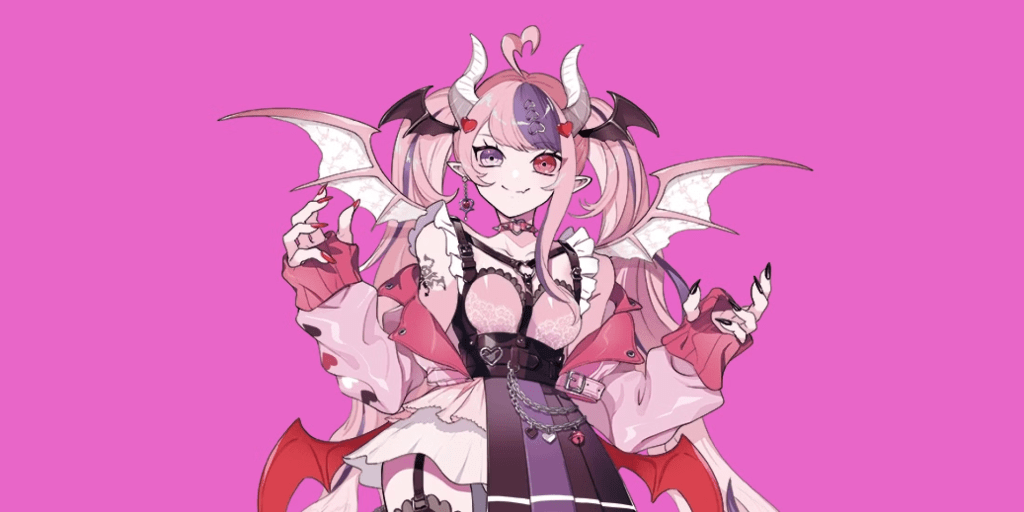
VShojo still had one undeniable powerhouse: Ironmouse, not just one of the most popular VTubers, but one of the biggest streamers in the world. Ironmouse, who lives with a severe immunodeficiency that has left her homebound, found purpose and community through VTubing. Her rise on Twitch was meteoric, fuelled by charisma, resilience, and the power of virtual identity.
In September 2024, Ironmouse launched a 40-day subathon, raising over $500,000 for an iron deficiency charity ,a cause deeply personal to her. The money was supposed to be handled and distributed by VShojo. Then, on July 21st, 2025, Ironmouse revealed that the charity still hadn’t received the funds.
The next day, Kson streamed a now-infamous broadcast featuring the CEO of VShojo’s Japanese branch, who publicly confirmed that:
– Kson herself had not been paid since September 2024
– The charity funds had likely been used to cover operational costs
In short: VShojo was making so little revenue that it was allegedly diverting money meant for its talents ,and for charity, just to stay afloat. It’s a staggering breach of trust.
Worse still, during this same period, VShojo was actively recruiting new talents. With the benefit of hindsight, this now looks less like expansion and more like desperation, a scramble for fresh revenue streams while the company was already underwater.
A History of bad business decisions
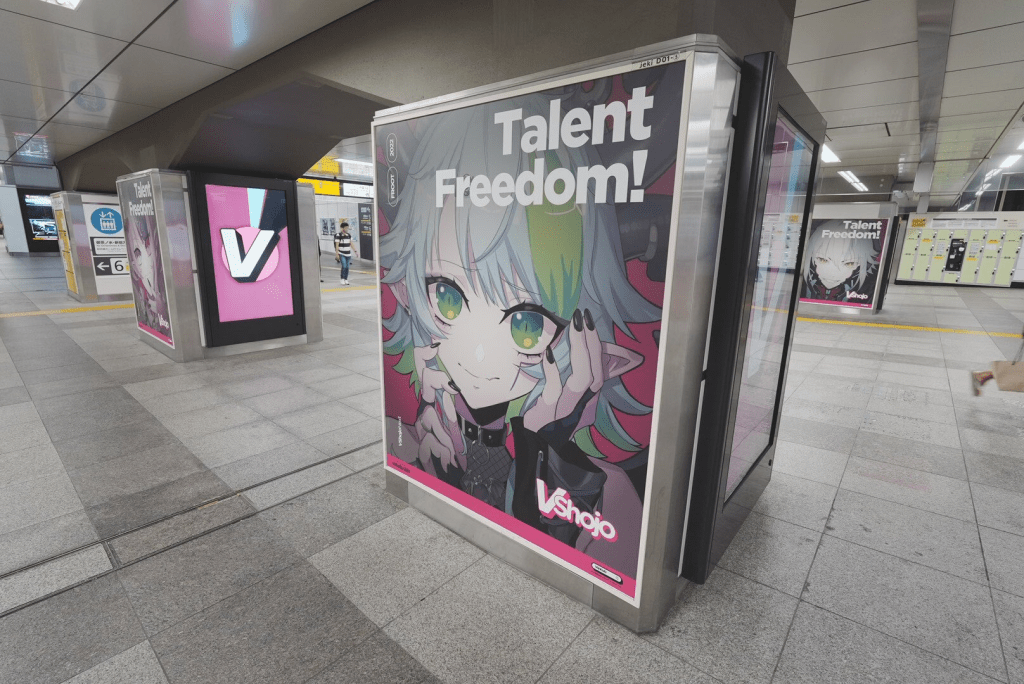
In 2022, VShojo took over the iconic Shinjuku Station advertisement pillars, one of the most expensive and high-profile ad spaces in Japan. The pillars were wrapped with images of their VTubers, accompanied by a bold English slogan: “Talent Freedom.”
Advertising in Shinjuku Station can cost anywhere between $7,500 and $15,000, depending on scope and duration. It’s a serious investment, and VShojo was using it to promote English-speaking talents with English-language ads in Japan. That means the campaign was likely ineffective at attracting new fans, especially in a country where Hololive and Nijisanji already dominate, with local talents, established brand trust, and cultural fluency.
In hindsight, the move feels less like a strategic marketing campaign and more like a flex, a way to plant a flag in rival territory. But costly gestures like this drain revenue during profitable periods, and when things go wrong later, those choices come back to haunt you.
VShojo burned through money when things were good, and when they needed that money most, it was already gone.
What does this mean for the future of vtubing?

The collapse of VShojo doesn’t signal the end of VTubing, far from it. In fact, it highlights just how rapidly the space is evolving and maturing.
In the past year, independent VTubers have seen explosive growth. And with VShojo’s talents owning their IP, they’ve essentially been functioning as independents all along, and will continue to thrive outside the agency. Much like the broader content creation landscape, it’s becoming clear that for many creators, independence is both creatively and financially more viable
For agencies, this creates a new challenge: offering real value beyond basic administrative support or covering startup costs. Agencies need to provide infrastructure, resources, and career opportunities that justify signing away a cut of income or control.
That’s exactly what Hololive has done. It’s no longer just an agency, it’s a full-blown multimedia ecosystem, with music, games, concerts, sponsorships, merchandise, and global brand recognition. Even when major talents like Gawr Gura become inactive or leave, Hololive continues to grow. Its recruitment is now more targeted, seeking creators who can fully leverage the tools and platforms the company offers.

Nijisanji, meanwhile, still holds strong influence in Japan. But ongoing controversies, particularly surrounding its English-speaking branch, may threaten its grip on the Western market.

Then there’s Phase Connect. Right now, they’re in a strong position, with breakout talents like Pippa and Tenma driving impressive growth. But it’s still unclear whether they can scale their current success into a long-term, sustainable model. Do they have the infrastructure and ecosystem needed to survive in the long run? That remains to be seen.
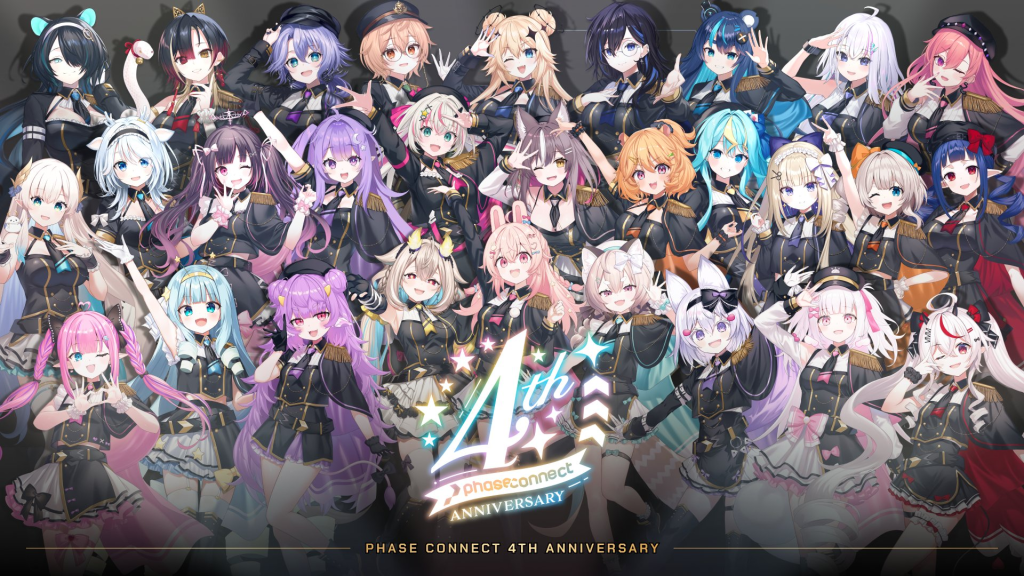
Ultimately, we’re watching the VTubing industry find its shape, shedding experimental models like VShojo’s and shifting toward more sustainable, value-driven ecosystems or fully independent creator models. For fans and talents alike, the future is still bright, but it’s definitely going to look different.
Final word
In the end, VShojo had been collapsing behind the scenes for some time, surviving only through the mistreatment of its talents and a betrayal of their trust. Now that the truth is out, the most experimental agency in VTubing has gone up in flames.
It’s a cautionary tale, a clear example of how not to run a talent agency, and perhaps a defining turning point for the industry.
Join the conversation
Please feel free to give me any feedback either in the comments below or you can find me on twitter @TimPMInsights where I post regular insights, statistics and just my general thoughts on video games and similar industries.
Enjoy my blogs? You can can always leave a like and subscribe (it’s free) so whenever I release something new you’ll get it straight to your email inbox. It’s much appreciated!

 Tim Browne - Consultant and Researcher for Creatives