
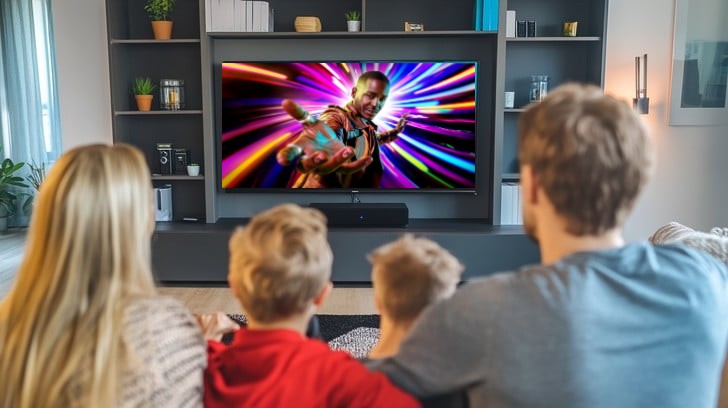
Growing up, I was always a massive Doctor Who fan, it completely took over my childhood. I remember cold Saturday nights when I’d have to sit through Strictly Come Dancing because my mum wanted to watch it, and then she’d have to sit through Doctor Who because I wanted to watch that.
That kind of dynamic now feels almost foreign to those growing up today, and that’s really because the way we consume content has changed. When I was a child, we only had one television and one computer in the house — and this was back when BBC iPlayer was such a new concept that my dad would often say things like, “That’ll put a virus on the computer,” or “That’ll drain all our internet data.” The result of this was that whenever we wanted to watch something, there had to be compromise.
The environment has completely changed now with the rise of smartphones, tablets, and games consoles. Households also tend to have far more devices than they did twenty years ago. The need to compromise on what to watch has vanished, if I want to watch something, I’ll do it on my laptop in my bedroom, and if my mum wants to watch Strictly Come Dancing, she has a television all to herself.
On top of that, advances in catch-up TV and streaming services mean we can now access content whenever and wherever we want. Platforms like TikTok, YouTube, and Instagram have made entertainment more accessible and more personalised than ever before. In this new world, you never have to sit through a mundane programme you’re not interested in; with a single swipe, the algorithm serves up something designed precisely for you.

The explosion of new content platforms has completely disrupted traditional TV giants. Recently, Mitchell and Webb returned to Channel 4 with their new sketch show Mitchell and Webb Are Not Helping a bold move, considering how far sketch comedy’s popularity has fallen over the past decade. Back in the early 2000s, British TV was dominated by sketch shows, but the rise of YouTube and Instagram meant that anyone could become a sketch comedian. The original appeal of the sketch show was its collection of short, two- to three-minute comedy bits filling a thirty- to sixty-minute TV slot. Now, anyone can watch or create bite-sized comedy from anywhere, so the idea of sitting down to consume all your “comedy bites” in one large package has become inconvenient and outdated.
Sketch shows aren’t the only casualties of this shift. I mentioned Doctor Who at the beginning of this piece and its recent decline is really what inspired me to write this. The show has seen a steep drop in ratings and reviews, and one key reason for this is its broad, “family” focus. Doctor Who has always aimed to appeal to everyone children, young adults, and parents alike but that very inclusivity now works against it. It’s a show built on compromise, designed to satisfy a wide audience without fully belonging to any of them. In an era where every viewer can instantly find content tailored specifically to their tastes, that kind of generic, catch-all programming no longer feels relevant.

As our content becomes more and more personalised, the risk of dilution becomes increasingly apparent. We’re no longer limited to a few dozen TV channels — now there are millions of creators across the internet, all competing for our attention. With audiences spread so thinly, resources are becoming diluted, and that’s beginning to affect the scale and quality of productions.
This is where AI poses a real threat. The rise of “content farms” mass-produced, low-quality videos generated to exploit algorithms is flooding our feeds and making it harder for genuine creatives to be seen. And if creators aren’t being seen, they’re not being monetised. Without that income, the ability to live off creative work or fund ambitious projects starts to erode.
In this environment, intellectual property (IP) has become more valuable than ever. Only content tied to strong, recognisable ecosystems can reliably survive. Take Pokémon, for example: it has its fingers in countless industries and partnerships, yet all that revenue ultimately funnels back to The Pokémon Company. By stamping its IP across everything from anime to lunchboxes, it sustains itself a level of brand resilience most modern creators can only dream of.

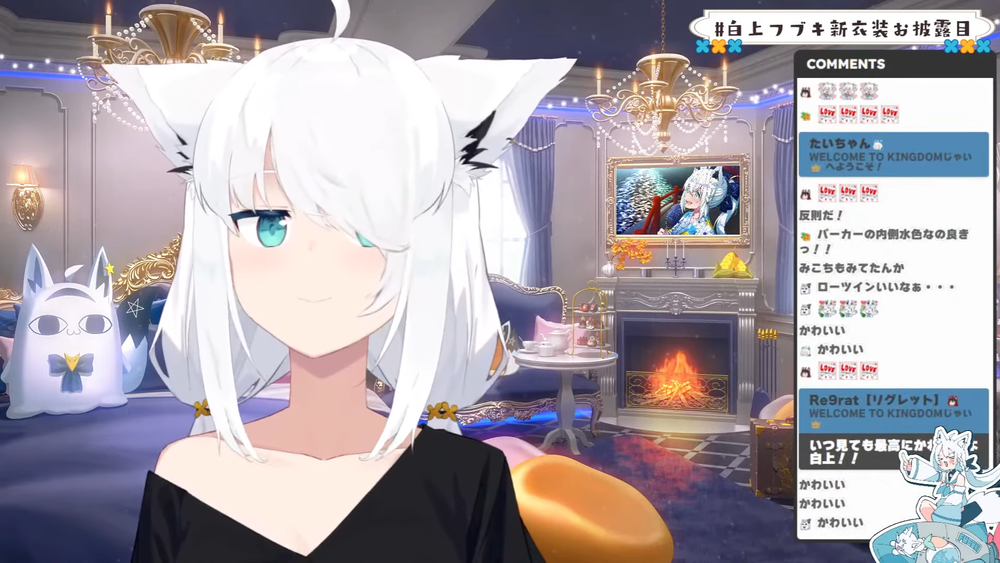
Vtubing is a perfect example of how modern creators can blend individuality with the power of a strong IP. By building digital personas that exist within larger ecosystems such as Hololive, creators can maintain a sense of personal connection with their audiences while still benefiting from the structure, resources, and branding of a unified network. It’s a new kind of creative compromise: a return to collective entertainment, but one rebuilt for the digital age.
Perhaps that’s where we’ve ended up not in the death of family or generic TV, but in its evolution. We may no longer gather around one screen on a Saturday night, but we still gather only now, it’s in comment sections, live chats, and algorithmic communities. The faces on the screen have changed, and so have the screens themselves, yet our desire to share experiences through stories and personalities remains as strong as ever.
Join the conversation
Please feel free to give me any feedback either in the comments below or you can find me on twitter @TimPMInsights where I often share my general thoughts on video games and similar industries.
Enjoy my blogs? You can can always leave a like and subscribe (it’s free) so whenever I release something new you’ll get it straight to your email inbox. It’s much appreciated!

 Tim Browne - Consultant and Researcher for Creatives