

Discovery is now more important than production
We do not live in a one-screen world anymore.
There was a time when content had to serve everyone at once. One television. One living room. One shared experience. If something was broadcast, it was broadcast to a household, not an individual.
That world is gone.
Now everyone has their own screen. Their own feed. Their own algorithm. Their own schedule.
And that changes how IP has to function.
Audiences are not captive anymore
The biggest shift in modern entertainment is not technological.
It is behavioural.
Audiences are more selective than ever because they have more choice than ever. There is an endless supply of games, videos, creators, and micro-communities fighting for attention.
You are not competing against a handful of studios.
You are competing against everything.
That means you cannot rely on a single product to carry an IP anymore. The old model of “release one thing and sell it hard” is becoming less effective, especially in games. Engage is about solving that.
Engage is discovery architecture
If Empower is about activating your creative community, Engage is about pulling people into the ecosystem in the first place.
It is about designing multiple entry points.
It is about understanding where attention lives and meeting it there.
And most importantly, it is about making entry frictionless.

Not all mediums behave the same
Television and high-budget streaming are still relatively finite. Production barriers are high. Output volume is limited. Once you finish a series, you are done.
Games are different.
There are AAA games, indie games, mobile games, live service games, multiplayer games, replayable games. The volume is enormous. And unlike a TV series, many games do not end. They loop. They persist.
This changes how discovery works.
Because when supply becomes infinite, discoverability becomes the core challenge.

Entry friction decides growth
Take Genshin Impact.
Its core product is a large-scale gacha RPG. But its accessibility is part of its engagement strategy. It is free. It runs on mobile. You can download it in minutes and be playing quickly.
That low barrier to entry matters.
Compare that to something like Final Fantasy. An 80-hour RPG with a premium price and hardware requirements. Incredible experience, but high friction. It demands time, money, and commitment upfront.
In today’s fragmented attention economy, friction matters more than ever.
Especially when the people with spending power are also the busiest.
The train commute. The lunch break. The gap between meetings. These are the new battlegrounds for engagement.
If your IP cannot exist in those spaces, it is limiting its reach.

Engage is not just advertising
Traditional marketing pushes a product at people.
Engage builds pathways toward it.
This is where Organ Marketing becomes critical.
People rarely convert after one exposure. They convert after three or four. Across different formats. Across different contexts.
An ad.
A clip.
A collaboration.
A recommendation.
A friend mentioning it.
That cumulative effect is what builds entry.
And crucially, a lot of that does not come directly from the IP holder. It comes from platforms, communities, and third-party systems.
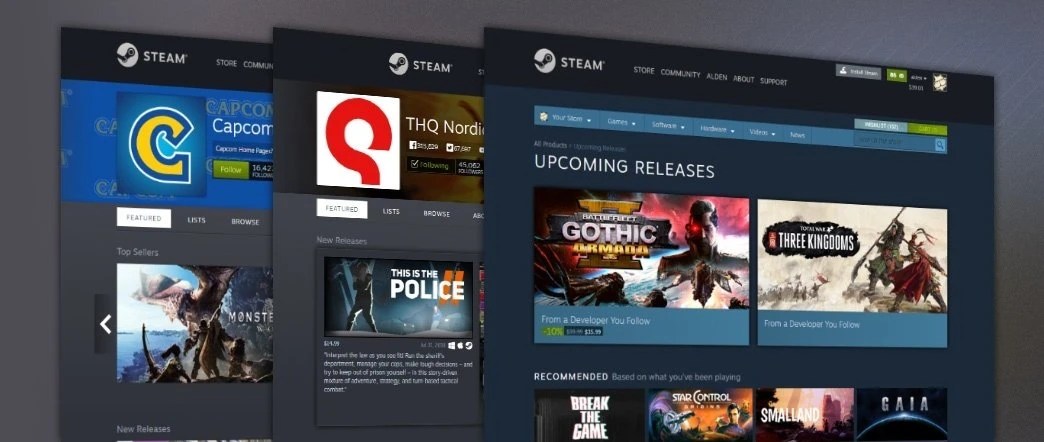
Steam recommendations.
MyAnimeList rankings.
YouTube suggestions.
TikTok edits.
Discovery today is ecosystem-driven, not campaign-driven.

Coalition ecosystems are the future
The future of IP is not one product.
It is a coalition of touchpoints.
A premium core experience.
A mobile entry point.
Short-form content.
Collaborations.
Events.
Community amplification.
Not everyone will enter at the same door.
Some people will start with a clip.
Some with a meme.
Some with a mobile download.
Some with a premium console title.
Engage is about accepting that reality and designing for it intentionally.
Engage and Enable overlap
There is a natural crossover between Engage and Enable.
Easy-to-digest content, free trials, and mobile accessibility are technically forms of enablement. They reduce barriers.
But Engage is the active layer. It is about positioning your IP in discoverable spaces and creating multiple, intentional on-ramps.
Enable removes friction.
Engage directs traffic.
You need both.
The strategic shift
The question IP holders need to start asking is not:
“How do we sell this product?”
It is:
“How do we design discovery?”
Because if your IP is not easy to find, easy to try, and easy to recommend, it does not matter how good it is.
In an era of infinite supply, obscurity is death.
Engage is the answer to that problem.

Next: Enable
Empower activates your creative community.
Engage pulls new people into the ecosystem.
But neither works if the internal structure collapses.
In the final part of this series, I will break down the third pillar of E³: Enable, and why protecting creative infrastructure is the only way this entire model remains sustainable.
 Tim Browne - Consultant and Researcher for Creatives