

Creative ecosystems only work if the infrastructure supports them
Creative industries have a strange habit of ignoring the conditions required to produce creativity.
Teams are rushed.
Budgets are misallocated.
Projects scale beyond their justification.
Then when the result fails, the conclusion is that the idea didn’t work.
More often, the environment failed the project.
This is where the third pillar of E³ comes in: Enable.
Enable is the infrastructure of creativity
If Empower activates communities and Engage brings new audiences into the ecosystem, Enable is what makes the whole system sustainable.
It is the internal and external infrastructure that allows creativity to exist.
Internally, that means teams having:
- realistic timelines
- proper tools and workflows
- healthy working conditions
- leadership that understands creative production
Creativity does not thrive under permanent crisis management.
Yet much of the AAA industry still operates as if crunch and overproduction are unavoidable.
They are not.
They are usually symptoms of poor project planning and misaligned expectations.
The AAA spending problem
Many modern game projects are funded as if success is guaranteed.
Budgets balloon.
Teams grow too quickly.
Marketing expectations escalate.
But the underlying business justification often does not match the scale of the investment.
When the game launches and fails to capture the expected audience, the result is predictable: servers shut down, teams are dissolved, and years of work disappear almost overnight.
We have seen this repeatedly in recent years with high-profile projects that simply could not sustain themselves.
The issue is rarely just quality.
The issue is that the ecosystem supporting the project was never designed for sustainability.

Enable also means enabling audiences
Enable is not only about internal production. It also has an external side.
Audiences need ways to enter the ecosystem.
If an IP only exists behind high barriers, it becomes harder for new people to discover and participate in it.
This is where Enable begins to overlap with Engage.
Engage brings people toward the IP.
Enable ensures they can actually access it. That might mean free entry points, low-cost platforms, or accessible formats.
Access points matter
One interesting example comes from animation.
The series Hazbin Hotel began as a YouTube pilot created independently by Vivienne Medrano. When Amazon funded the full production, it became a professional studio project distributed through Prime Video.
At the same time, Medrano’s other series, Helluva Boss was also taken up by Amazon but remained on YouTube and continued releasing episodes for free.
That decision preserved a free entry point into the wider creative ecosystem around the studio’s work.
People can encounter the world without needing a subscription or purchase.
That is enabling access.
Games have their own version of this.
Fortnite, for example, functions as an enormous entry hub for multiple IPs, events, and collaborations. Its free access point allows players to encounter brands and experiences they might never have engaged with otherwise.
Enablement creates these doors.

Quality requires time
There is a fundamental tension in creative industries.
Quality requires time.
Digital ecosystems demand constant output.
If companies try to satisfy the second without respecting the first, the result is burnout and declining quality.
Enable exists to protect the conditions required for good work to happen.
That includes recognising the limits of creative production and structuring projects around realistic expectations.
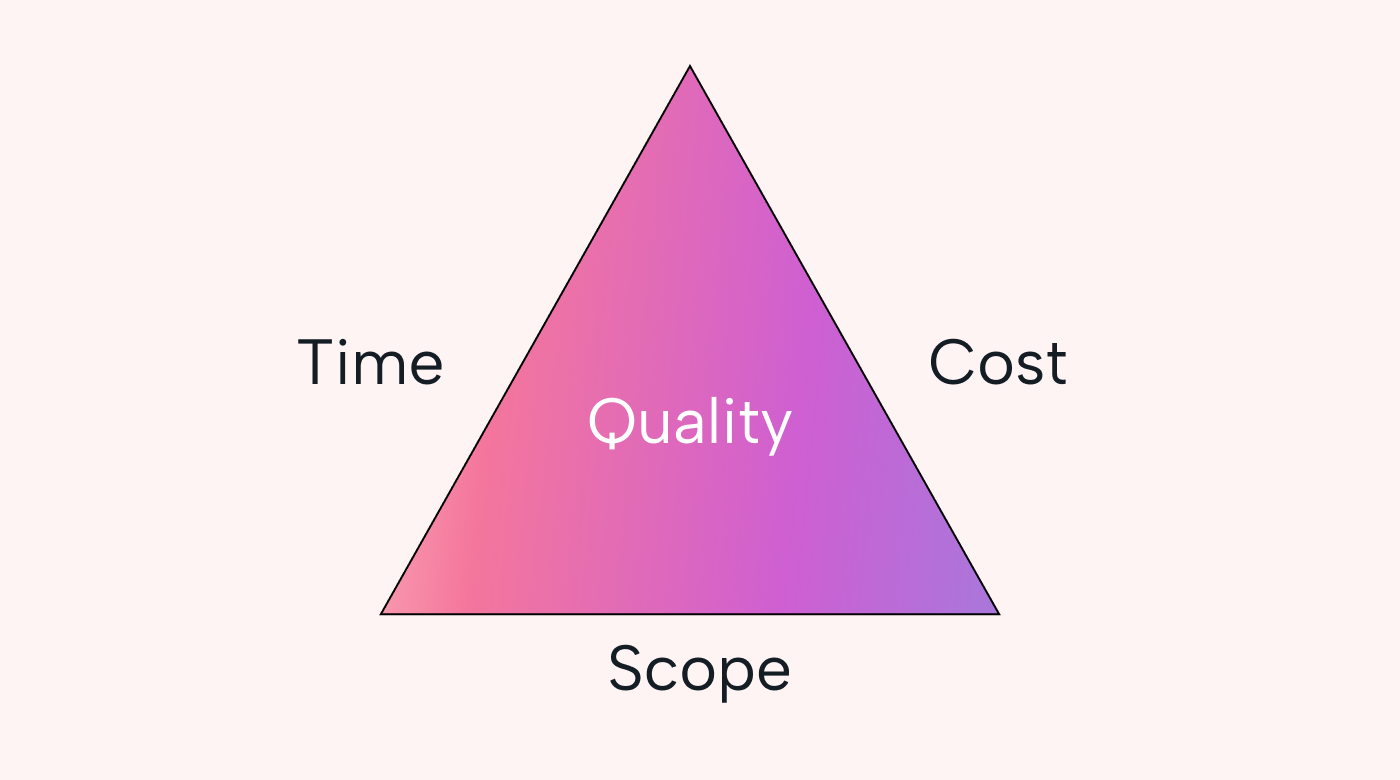
Project management principles like the triple constraint—time, scope, and resources—still apply. When companies ignore those constraints in pursuit of growth, the result is almost always instability.
Quality is the real sustainability strategy
Many companies still approach entertainment with a 20th-century mindset.
Make a product.
Sell the product.
Move to the next one.
That model becomes fragile in a world with endless alternatives.
You cannot assume your next release will sell enough units to recover development costs.
But quality does something different.
Quality builds trust.
And trust is what keeps audiences returning to an ecosystem over time.
Nintendo is one of the clearest examples of this approach. Its releases are rarely rushed, its projects are scaled carefully, and its IP carries a reputation for consistency. That reputation becomes a form of long-term stability.
Enable is the foundation
Empower allows communities to contribute.
Engage allows new audiences to discover.
But without Enable, neither pillar can function properly.
If teams are burned out, creativity collapses.
If audiences cannot access the ecosystem, growth stalls.
Enable is the structural layer that holds everything together.
It is the quiet work of building the conditions where creativity can actually thrive.
And without it, the rest of the ecosystem eventually breaks.
 Tim Browne - Consultant and Researcher for Creatives