
VTubing is still a relatively young industry. But as it matures, one question continues to linger beneath the surface: does the industry actually understand its own risk structure?
VTuber organisations operate in a strange hybrid space. On one hand they function like traditional talent agencies, managing performers and supporting their careers. On the other hand they act as IP companies, building characters, brands, and merchandise around those performers.
This dual identity creates a management structure that does not cleanly fit into traditional business models. In many ways, the VTuber industry sits somewhere between entertainment management, character IP ownership, and digital creator networks. Because of this, many of the risks surrounding the industry are still poorly understood.
However, recent events have already begun to reveal where some of the biggest structural weaknesses lie.
Your IP is your value
In VTubing, the character is the product.
The avatar, the personality, and the brand identity form the core value of the entire ecosystem. Merchandising, collaborations, sponsorships, and licensing all rely on the stability of that IP.
If the company cannot reliably control or retain that IP, the entire business model becomes fragile.
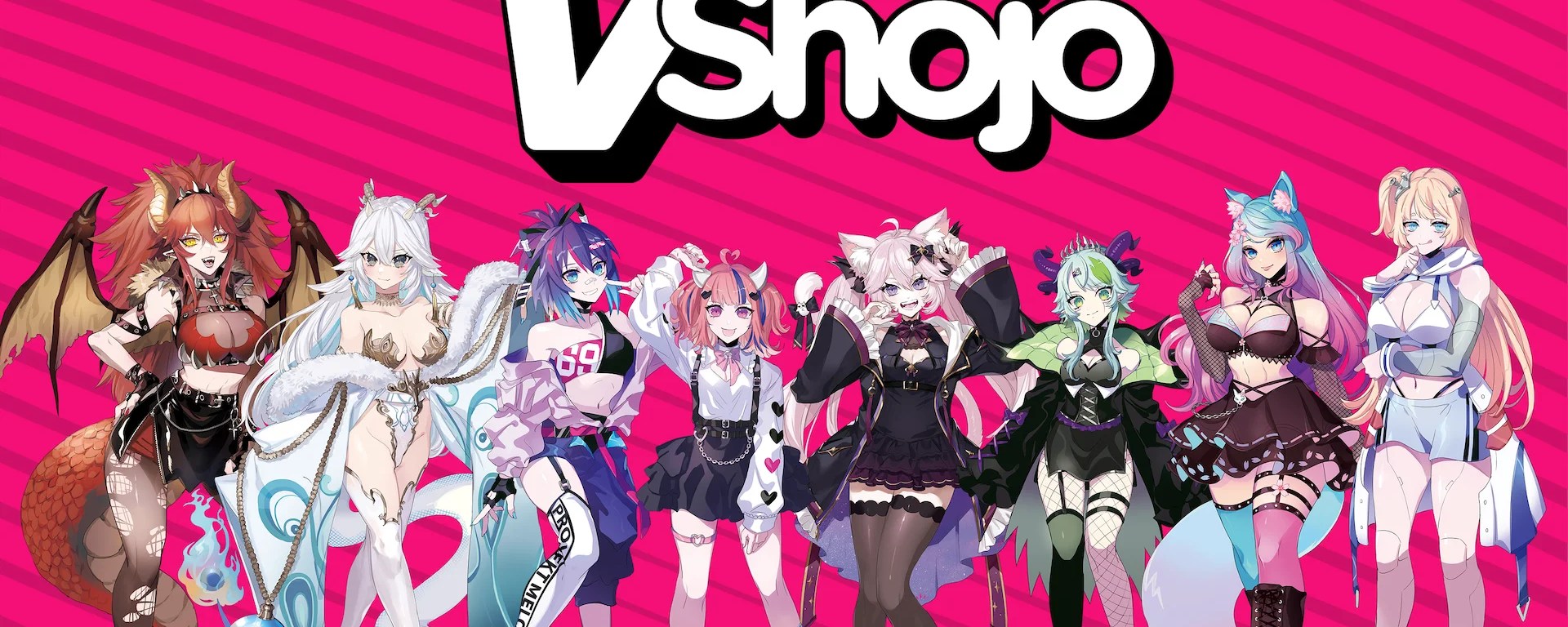
A major case study emerged last year with the collapse of VShojo.
The agency imploded after Ironmouse publicly claimed the company had failed to pay $500,000 to the Immune Deficiency Foundation, funds that had been raised through charity efforts tied to her activities. The controversy escalated quickly, leading to a complete breakdown in trust between the organisation and its talents.
Within a short period of time, every talent left the company and VShojo effectively ceased operations.
When talent owns the IP
One of VShojo’s core selling points was talent freedom. Unlike many other agencies, the company allowed talents to retain ownership of their VTuber identities.
This was attractive to creators. It meant they could maintain control over their character and career direction even if they left the organisation.
But that same policy also created a structural weakness.
Because the talents owned their IP, VShojo itself held very little long-term value. The company functioned primarily as an operational support structure providing management, promotion, and infrastructure. But the actual intellectual property that audiences cared about did not belong to the company.
This meant that if the relationship between the agency and its talents broke down, the entire organisation could disappear almost overnight.
Which is exactly what happened.
The difference between an agency and an IP company
Most successful VTuber companies operate with a different balance.
Organisations such as Hololive or Nijisanji function primarily as IP companies. They develop and control the characters that their talents perform as. This allows the company to build long-term licensing relationships, merchandise lines, and partnerships with other industries.
From a business perspective, this structure is far more stable. The IP remains with the organisation even if a performer leaves.
VShojo attempted to operate more like a traditional talent agency while still competing in a market dominated by IP holders.
This created a contradiction.
The company was expected to operate at the scale of a character IP business, but it did not actually control the characters.
When the business model doesn’t match the market
Because the company did not control its core assets, long-term partnerships and licensing became much riskier.
A brand collaborating with a VTuber agency needs confidence that the character will still exist under that organisation in the future. If the performer can simply walk away with the IP, the value of that collaboration becomes unstable.
This makes it much harder for the agency itself to build durable business relationships.
In practice, it meant that VShojo’s structure resembled a talent management company while it attempted to compete with companies built around IP ownership.
That mismatch made the business model extremely fragile.
A young industry still finding its structure
The collapse of VShojo does not necessarily mean the talent-ownership model cannot work. But it does demonstrate that VTubing still lacks clear management frameworks for balancing talent freedom with corporate stability.
Because the industry is so new, many of these questions have never been properly studied or formalised.
What level of IP ownership should talents have?
How much control should companies maintain?
What structure best supports long-term sustainability?
These are questions the industry is only beginning to answer.
The lesson
The biggest takeaway from this situation is simple.
In VTubing, IP is the foundation of the entire ecosystem. If a company does not have a stable relationship with the intellectual property it builds around, the organisation itself becomes unstable.
VShojo’s collapse showed what happens when that balance breaks.
And as the industry continues to grow, companies that fail to understand this risk may find themselves facing the same problem.
 Tim Browne - Consultant and Researcher for Creatives